Buying a Lagoon catamaran requires balancing intended use against custom specifications. Success hinges on choosing between owner vs. charter layouts, accounting for a 20-35% “sail-away” options premium, and auditing structural elements like balsa-core hulls during surveys.
The steady trade winds of the Mediterranean or the deep turquoise channels of the Exumas share a common horizon: the distinctive silhouette of a Lagoon catamaran. As a prominent force in the multihull market under the Beneteau Group umbrella, Lagoon has shaped the blue-water cruising landscape. Characterized by vertical saloon windows, expansive flybridges, and volume-maximizing hulls designed by VPLP Design, these yachts are built for comfort, stability, and effortless entertaining.
However, stepping into the world of luxury multihull ownership requires moving past glossy brochures. To secure a vessel that aligns with your private cruising goals or high-yield charter investment, you must understand the practical realities of the current lineup, true acquisition costs, and hidden market nuances.
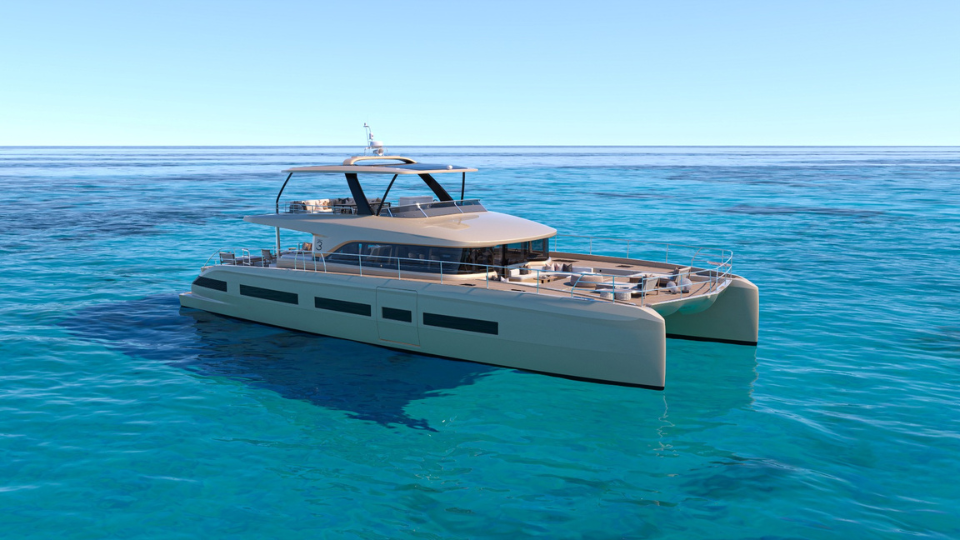
1. The Core Lineup: Navigating Modern Lagoon Models
Every Lagoon catamaran balances interior volume against blue-water sailing capabilities. The modern fleet cleanly divides into accessible, owner-operated cruisers and crewed luxury yachts.
The Mid-Range Family Cruisers (40 to 50 Feet)
-
Lagoon 42: A highly successful model among owner-operators. Its mast step shifted aft—a design signature from VPLP—reduces pitching and simplifies shorthanded sail handling. It is the sweet spot for couples transitioning to full-time cruising.
-
Lagoon 46: This model refines the flybridge concept with a centered helm station, offering deep bulwarks for safety. Inside, Nauta Design maximizes natural light, making the interior feel significantly larger than its 46-foot LOA implies.
-
Lagoon 51: A newer model designed for sustainable energy integration. The flybridge is optimized to host extensive solar arrays without disrupting guest seating, appealing to owners looking for longer off-grid autonomy.
The Flagship Luxury Yachts (55 Feet and Above)
-
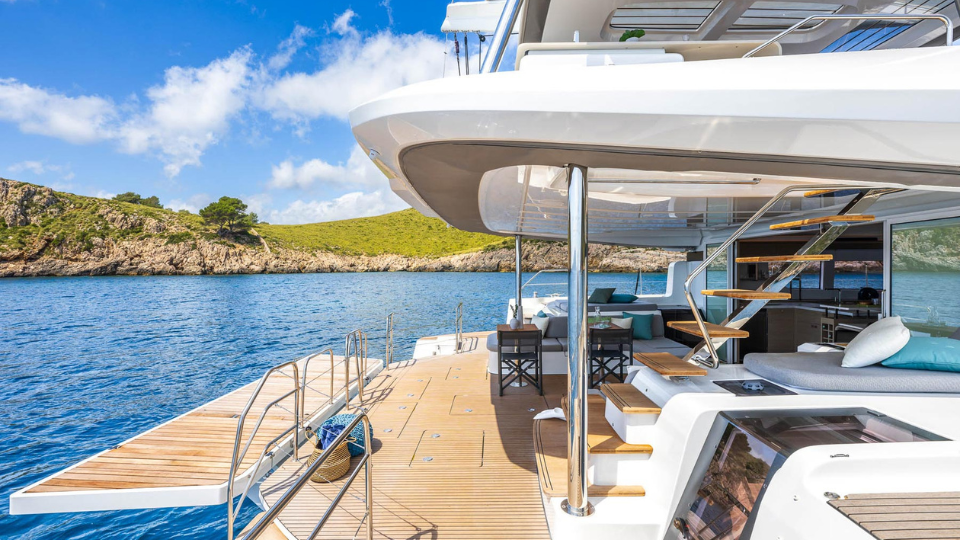
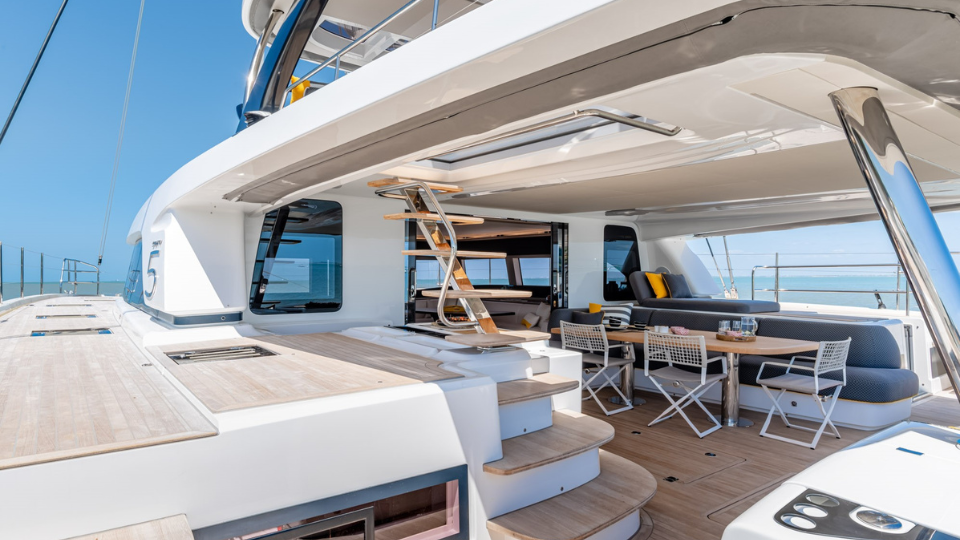
Lagoon 55 & Sixty 5: These models transition into mini-superyacht territory. Featuring open-concept aft cockpits that connect directly to the primary saloon, they are built to accommodate dedicated crew quarters, high-capacity watermakers, and dive compressors.
-
Seventy 7: The pinnacle of the brand’s production. Boasting a massive gross tonnage (GT) and a private hull-side fold-out terrace (the “owner’s beach”), this yacht competes directly with custom monohull superyachts for onboard real estate.
2. The Cost of Ownership: Pricing, Options, and the Secondary Market
When buying a Lagoon catamaran, the advertised ex-factory base price is only a starting point. To make a vessel truly ocean-ready, owners must budget for significant additions.
The “Sail-Away” Price Premium
A standard factory configuration lacks the essential systems needed for comfortable blue-water cruising. Upgrading to a “sail-away” specification typically adds 20% to 35% to the base invoice. Essential upgrades include:
-
Power Generation: Extensive lithium-ion battery banks, high-output alternators, and solar arrays.
-
Climate & Comfort: Watermakers (100+ liters per hour), reverse-cycle air conditioning, and a generator (e.g., Onan 11Kva).
-
Rigging & Performance: Upgraded Code 0 or Gennaker rigging, electric winches, and folding propellers to reduce drag.
Estimated Market Valuation (A Model-by-Model Breakdown)
-
Lagoon 42: Baseline ex-factory base price starts around $480,000. Expect a realistic, cruising-ready cost between $620,000 and $680,000. Well-maintained pre-owned hulls (3–5 years old) on the brokerage market trade between $450,000 and $550,000.
-
Lagoon 46: Baseline ex-factory base price starts around $690,000. A fully commissioned, blue-water ready model scales to $890,000 – $980,000. Brokerage values for recent models hold steady between $680,000 and $790,000.
-
Lagoon 51: Baseline ex-factory base price starts around $1,050,000. Equipped with extensive off-grid solar arrays and premium systems, the ready-to-sail cost sits at $1,350,000 – $1,450,000. Pre-owned brokerage models are valued between $1,100,000 and $1,250,000.
-
Sixty 5: The base factory price for this luxury model begins at approximately $2,800,000. Commissioned with semi-custom crew layouts and high-end toys, the sail-away cost readily exceeds $3,500,000, while brokerage alternatives command $2,900,000 to $3,200,000.
3. Strategic Acquisition: Critical Pitfalls and Fleet Customization
The Layout Trap: Owner’s Version vs. Charter Layout
One of the most consequential decisions you will make is selecting the internal cabin configuration.
-
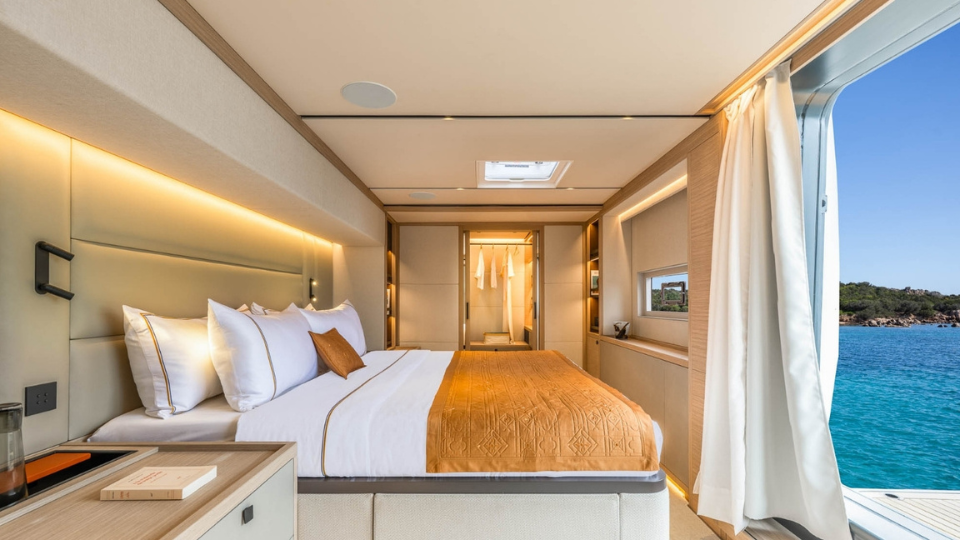
Owner’s Version (3 Cabins): This layout dedicates an entire hull to a master suite featuring a queen berth, desk, couch, and large walk-in shower. This configuration is highly sought after on the secondary market, offers premium private comfort, and holds its resale value remarkably well.
-
Charter Layout (4+ Cabins): This design divides the hulls into symmetric en-suite cabins to maximize guest density. While ideal for generating commercial charter yield, these vessels face a significantly larger pool of competing inventory when it comes time to sell on the brokerage market.
Critical Marine Survey Points for Used Lagoons
If you are buying a pre-owned Lagoon, your due diligence checklist must include a specialized multihull surveyor to audit specific structural areas:
-
Balsa-Core Moisture Audits: Lagoon utilizes vacuum-infused balsa-core construction above the waterline for weight reduction and thermal insulation. A thermal imaging scan and moisture meter reading of the hulls and decks are mandatory to ensure no water intrusion has occurred around stanchions or through-hulls.
-
Escape Hatches: Older models featured bonded glass or plastic escape hatches in the hulls. Ensure these have been inspected, re-bedded, or upgraded to compliant, mechanically fastened variants to prevent catastrophic failure.
-
Bulkhead Inspections: Inspect the forward and main structural bulkheads for any signs of cosmetic fracturing or movement, which can occasionally occur if a vessel has been driven hard in heavy head seas.
Frequently Asked Questions
How long does it take for the factory to deliver a new Lagoon catamaran?
Depending on the specific model and the production schedules at the CNB shipyards in France, lead times for custom orders typically range from 8 to 18 months. High-demand models, such as the Lagoon 46, often have longer waiting lists, making brokerage options with immediate delivery a viable alternative for many buyers.
Do Lagoon catamarans hold their resale value well?
Yes. Thanks to their global brand recognition, consistent construction standards, and high demand in both the private and commercial charter sectors, Lagoon catamarans experience less initial depreciation than many niche monohulls, often retaining 75% to 85% of their value for the first five years.
Is it easy to sail a Lagoon catamaran solo?
Models up to the Lagoon 51 are designed with owner-operators in mind. Because all halyards, sheets, and reefing lines are connected directly to the electric winches at the helm, a single experienced sailor can safely handle the vessel, although an integrated autopilot system remains essential for long voyages.